

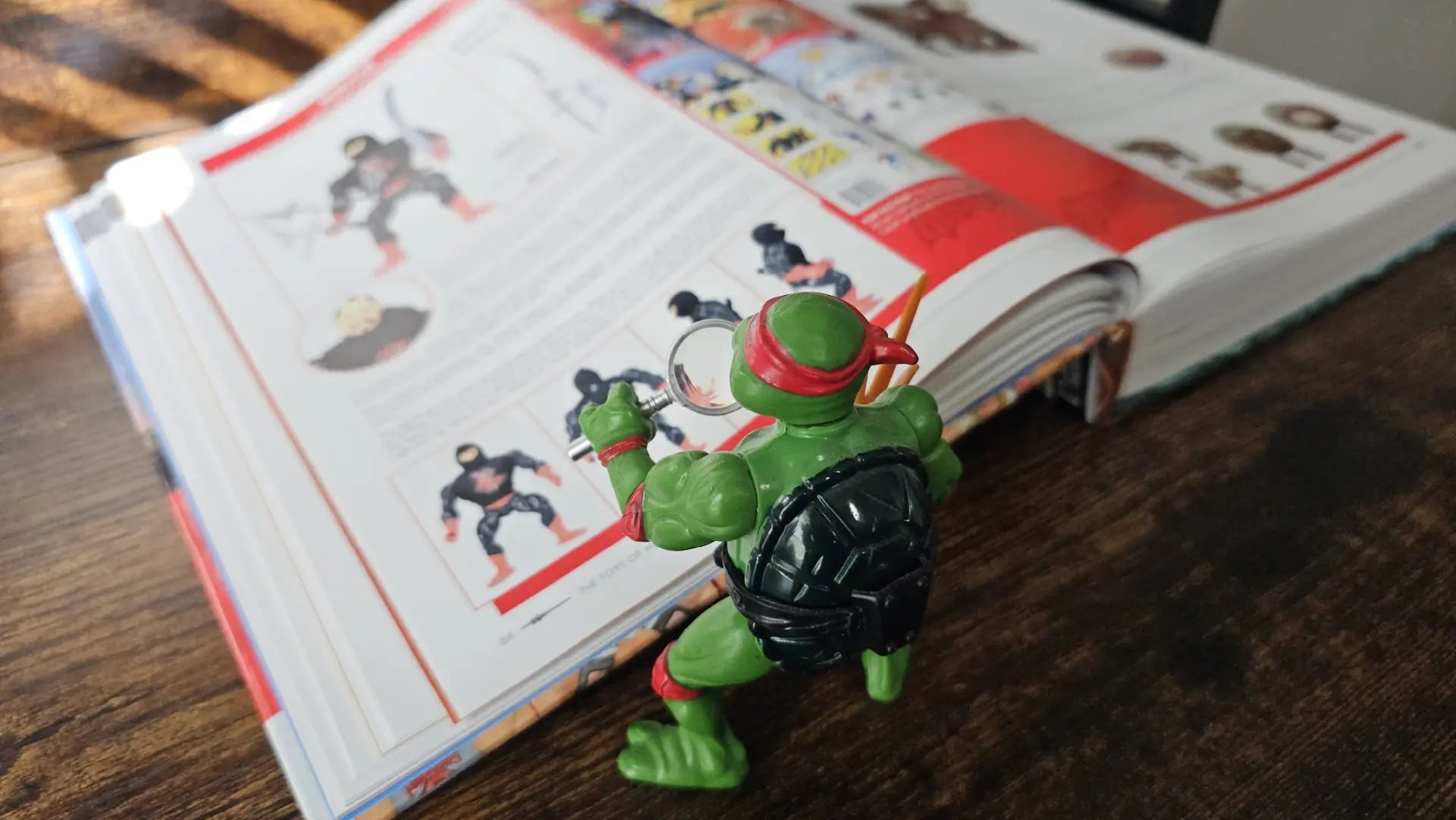
Pricing vintage action figure accessories can be as simple or as complicated as you want to make it. Is it science? Is it art? It’s more of a fusion of both. The science builds a foundation from past sales data. The art fills in the gaps with perceived value gained from scarcity and what the market is willing to respect.
This guide is written for collectors who want to understand why certain accessories cost what they do, not just what the price tag says.
What Determines the Value of a Vintage Action Figure Accessory?
When I evaluate the fair market value of a vintage action figure accessory, I look at several key factors working together, not in isolation:
- Sell-through rate of the action figure line it belongs to
- Overall value of the action figure itself
- How frequently the accessory appears online
- Current listed prices versus actual sold prices
- Condition
Each one tells a different part of the story. Together, they shape what I consider reasonable, fair, and sustainable pricing.
Sell-Through Rate for Vintage Accessories
Sell-through rate is one of the easiest data points to pull from online marketplaces, and one of the most useful.
Search for something like:
“vintage TMNT Rocksteady 1988”
Take note of how many listings are currently active. Then filter by “Sold” to see how many have actually moved. The formula is simple:
Sell-through rate = Sold listings ÷ Active listings
For example:
Three sales versus ten active listings = 3/10 = 30% sell-through rate
When it comes to accessories, I usually add a small bump of 5 to 10 percent. Accessories are typically harder to find than the figures themselves, especially original vintage parts that haven’t been mixed into lots or lost to time.
Of course, this number is never perfect. Keywords vary. Algorithms interfere. Some listings hide in plain sight. But even imperfect data is better than guessing in the dark.

The Role of the Action Figure’s Value
The value of the figure itself is the closest thing we have to a hard science in this process.
If a complete action figure consistently sells for $50 and includes four accessories, a simple breakdown might look like this:
Figure: $30
Accessories: $5 each
That’s not a rule. It’s a starting point. An empty canvas.
In reality, some small, difficult-to-find accessories can sell for $20 to $25 on their own, sometimes outpacing the value of the figure itself. That’s where formulas start to fall apart, and judgment steps in.
Even so, the value of the original figure remains one of the most important reference points when evaluating an accessory’s place in the market.
How Internet Frequency Shapes Perceived Value
This is about visibility. Not hype. Not nostalgia. Just presence.
I look at how often an accessory shows up anywhere online, across marketplaces, forums, and collector spaces.
Some items flood the market and never seem to leave.
Some appear consistently, but in low supply.
Some vanish for months, then resurface.
Some almost never appear at all.
Where an accessory lands on this spectrum can shift it from “I’ll wait for the next one” to “This might be the only chance for a long time.” That’s where perceived value starts to stretch, sometimes dramatically.
Listed Prices vs. Sold Prices on Marketplaces
This is where reality checks happen.
Listed prices often tell a hopeful story. Sold prices tell the honest one.
An accessory with dozens of listings but very few completed sales usually isn’t as valuable as it looks on the surface. On the other hand, an item with little competition and consistent sales can quietly create its own market.
My goal is to stay within a reasonable range of perceived value, not to chase the highest possible number and not to undercut the market into the ground.
Why Condition Matters (But Not as Much as You Think)
Condition carries weight, but for accessories, it’s not king.
Most vintage parts fall into two broad categories:
Reasonable wear you’d expect from a decades-old piece
Broken, cracked, or worse yet, chewed
For action figures and comics, condition can define value. For accessories, rarity and demand usually speak louder, unless the damage makes the item unusable or incomplete.
An Example of Fair Market Philosophy
Let’s run a simple thought experiment.
No disrespect to any seller. If someone can find a buyer willing to pay $300 for an accessory, that’s the free market doing what it does best.

But when I look at historical sales data, that same item consistently sells around $120, plus shipping. In my store, that would likely land in the $100 to $120 range with shipping included.
Pricing far above market expectations doesn’t just push an item out of reach. It pushes the store itself outside the market.
My long-term goal isn’t to win a single sale at any cost. It’s to build a reputation as a reliable reference point for collectors who want fair pricing in a space that can often feel unpredictable.
A Collector-First Pricing Philosophy
Markets fluctuate. Sometimes an item will be slightly underpriced. Sometimes slightly over. That’s part of the terrain.
What I work to avoid are the extremes.
I’d rather earn trust over time than squeeze every possible dollar out of a single transaction. A store that feels fair becomes a place collectors return to, even when they’re just browsing, researching, or comparing notes.
From a fellow collector, not just a seller, this isn’t about winning the market. It’s about understanding it, respecting it, and building something in it that lasts.


![80s & 90s [Misc]](http://armemup.com/cdn/shop/collections/Thundercats_Lion-O_LJN.png?v=1766266651&width=1024)
